
Benjamín Felice
Tucumán, Argentina, 1990.
Lives and works in
Buenos Aires.
Benjamín Felice developed his artistic vocation at the School of Fine Arts and Decorative and Industrial Arts Maestro Atilio Terragni at the National University of Tucumán. He holds a degree in Cinematography and a Photography diploma from the Faculty of Film, Video, and Television School at the same university. Felice also studied programming, taught 3D modeling, and currently leads art crits as part of his teaching practice. With his work, he also participated in art crits with prominent figures from the Argentinian scene, including artists Verónica Gómez, Eduardo Stupía, Eduardo Basualdo, Lux Lindner, and curator and critic Rafael Cippolini.
He 's been a fellow of Torcuato Di Tella University' s Artists Program (2017) and of Yungas Contemporary Art Program (2019). He also took part of Boca de Fuego project, an one-year residency programme at Centro Munar (Buenos Aires, 2018) and La Ira de Dios residency (Buenos Aires, 2015). In 2024, he won the Azcuy Award organized by the Azcuy Architectural Firm together with the Museum of Modern Art in Buenos Aires.
In 2020 he founded OHNO Gallery and served as its Artistic Director until 2024. Felice has exhibited both individually and collectively at institutions including The Museum of Modern Art Buenos Aires, MALBA (Museum of Latin American Art in Buenos Aires), MALBA Puertos (the Museum second house in Tigre, Buenos Aires), the Immigration Museum (BRAQUE Prize), Palacio Barolo, and galleries such as Piedras, Barro, Miranda Bosch Gallery, and Pasto—which represents his work in Argentina—, as well as recognized institutions in Argentina including MÓVIL Contemporary Art, the National Fund for the Arts Salon at Casa Nacional del Bicentenario, and the Buenos Aires Youth Art Biennial, among others.
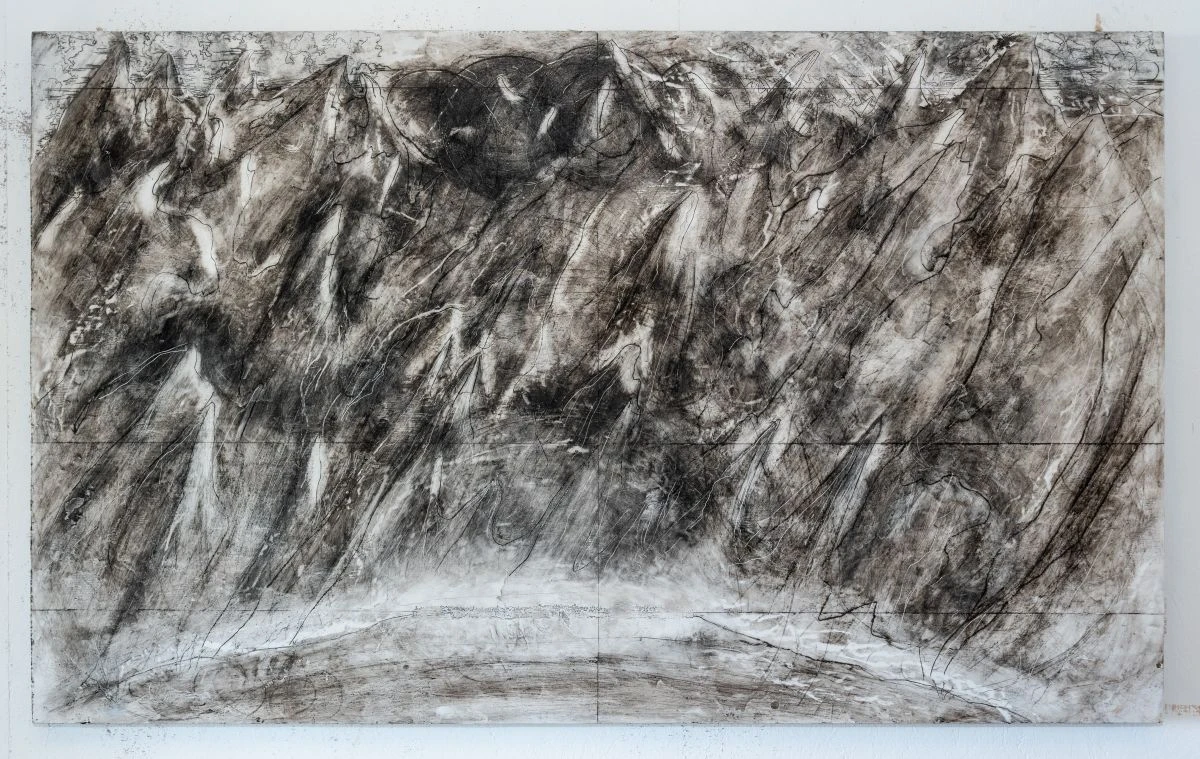
With Tomas Redrado Art Gallery, he participated in the 2023/2024 editions of ArteBA and joined the Tomas Redrado Art + Arthouse residency in José Ignacio, Uruguay through April-May 2025. His painting practice explores modern painting through themes such as Americanism and popular and folkloric imagery. He aims to reevaluate categories often dismissed by academia as "naïve art," revitalizing these discussions through critical frameworks. His sculptures incorporate technological tools like industrial design and 3D printing to reinterpret early 20th-century academic Americanist applied arts. Felice's work combines techniques and aesthetics that deliberately blur the boundaries of recognition, revealing new horizons that do not require the rejection of artistic traditions to construct critical imaginaries. Instead, his approach embraces representational dilemmas as a prompt for inquiry: a transcultural construction of a Latin American artistic present.